case study
From No-Cool Call to Signed Plan: Anatomy of One Visit
One July no-cool call, start to finish: the diagnosis, the capacitor reading, the coil the homeowner had never seen, and the exact moment the plan came up. Every step of the visit is broken out.
The Call: 4:10 PM in July, Upstairs Not Cooling
At 4:10 PM on a Wednesday in mid-July, the dispatcher picked up a call from a homeowner in a 2-story colonial. The upstairs bedrooms were hot, even with the thermostat set to 68. Downstairs felt fine. The homeowner had already checked that the filter was in place and the breaker was not tripped. No strange noises, but the air from the vents upstairs was barely cool. The family had moved in last spring and had no prior service records on file.
The dispatcher slotted the service call for 5:00 PM. The tech on duty, Miguel, loaded up his van with a new 35/5 run capacitor, a contactor, and some universal relays, just in case. He grabbed a coil cleaning kit and a couple of MERV 8 filters. The house was less than ten minutes away, but summer traffic meant he rolled up at 5:12 PM.
Miguel greeted the homeowner, introduced himself, and listened to a quick recap of the symptoms. He asked how long the problem had been going on and if the system had ever been serviced. The homeowner said, "Not since we moved in."
Keep reading: A2L Refrigerants and the Next Five Tune-Up Seasons
Diagnosis: Reading the Run Capacitor and the Compressor Amp Draw
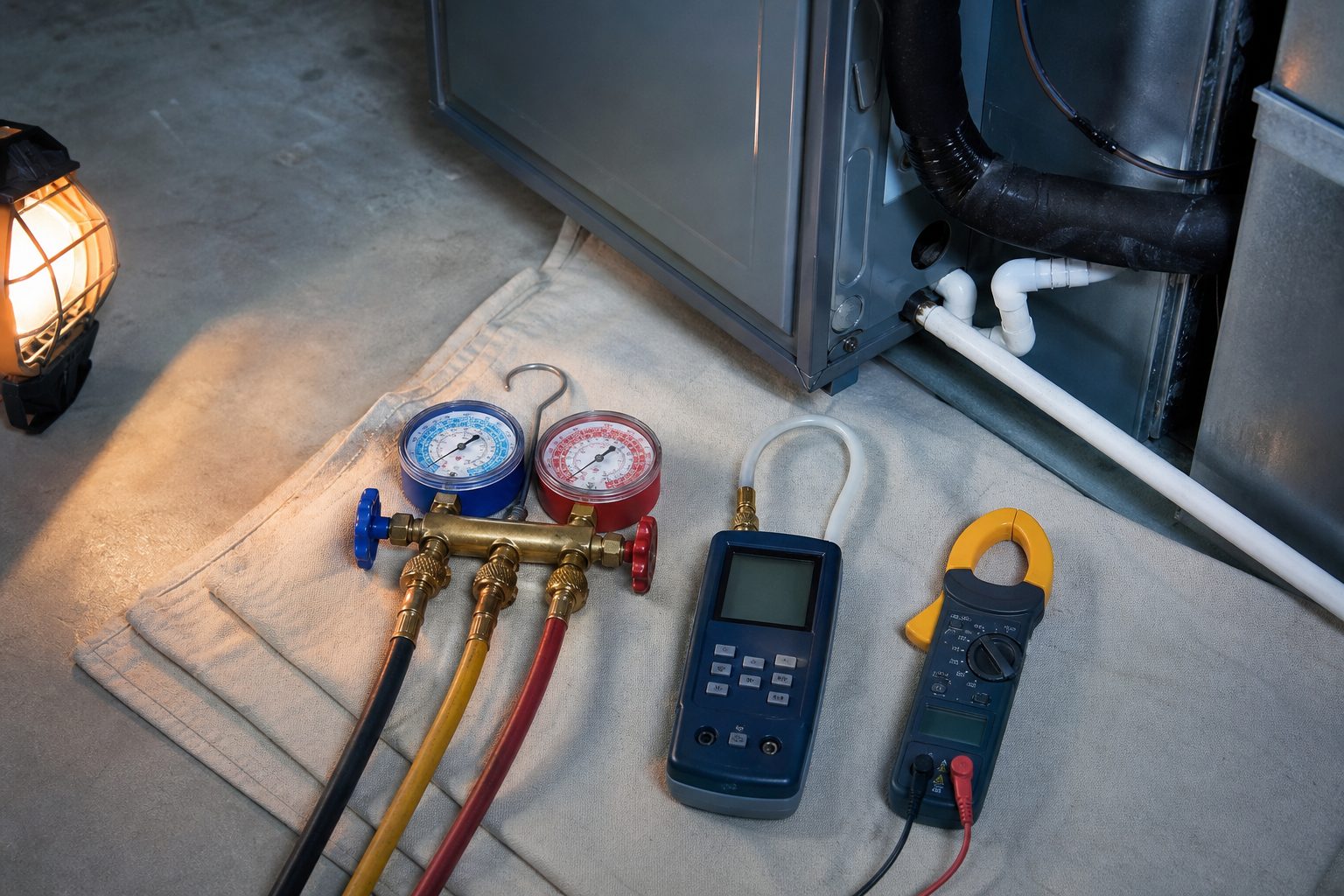
Miguel started with a walk around the outdoor condensing unit. He checked for obvious issues: no ice buildup, no oil stains, and the fan was spinning, though not fast. He attached a clamp meter to the compressor wire to get the running amp draw. The reading was higher than the nameplate RLA. Next, he powered down and opened the control panel.
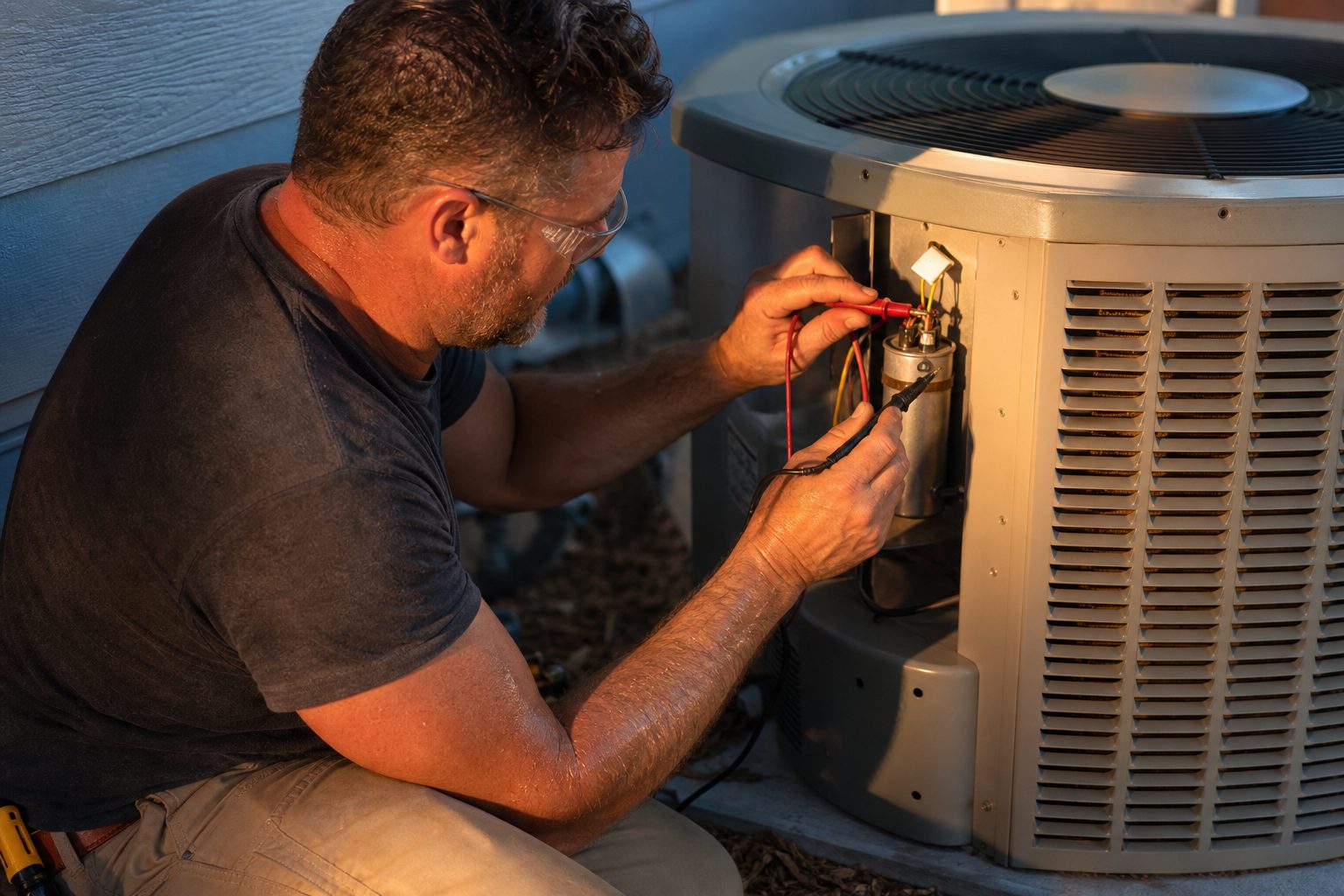
Inside, dust and grass clippings covered the bottom of the panel. Miguel discharged the capacitor and used his meter to measure microfarads. The label called for 35/5, but the reading was 28.7/4.1. He noted the drop, then checked the contactor points for pitting. Minor wear, but nothing alarming. He reassembled the panel, restored power, and ran the system again while watching the gauge set. Suction pressure was low, and the superheat was high, signs of restricted airflow rather than a charge problem.
Checking the Air Handler
Inside, Miguel found the air handler in a hallway closet. He asked for permission to open the unit. When he removed the lower panel, he found a gaping rectangle where the filter should be. No filter, just hair and dust packed into the return plenum. He explained to the homeowner that the missing filter would allow debris to clog the coil.
He shined his inspection light through the coil. The aluminum fins were caked with lint and dust. "This is likely why you are not getting enough cool air upstairs," he said. "The system is running, but the coil can't move enough air."
Showing the Homeowner the Coil and the Empty Filter Slot
The homeowner stood by as Miguel held the inspection mirror and light. He pointed out the clogged coil, describing how dust buildup acts like a blanket, stopping airflow and making the compressor work harder. When he pulled the return grille, he showed the homeowner that the filter slot was empty. He explained that even a few months without a filter could lead to this kind of buildup, especially in summer.
"Most people never see this part of the system," Miguel said. "But this is where the airflow starts. When it's blocked, the whole house feels it." He showed how the coil fins should look, shiny, with visible gaps between them, and compared that to the matted gray patch covering most of the surface. He explained that this was a common result when filters were left out or changed too infrequently.
The homeowner asked if cleaning the coil would fix the problem. Miguel replied that a thorough cleaning would make a significant difference and that keeping a filter in place was critical to avoid a repeat.
Keep reading: The 24-Point Spring Cooling Tune-Up Checklist for Techs
The Repair Quote and the Two Prices Printed Next to It
Back at his van, Miguel printed a quote for the coil cleaning and a new run capacitor. He listed the price for the one-time coil clean and the part, showing labor and materials separately. Then, underneath, he printed a second line: the same work, but with a $0 charge for the coil cleaning "with maintenance agreement." The capacitor price was unchanged in both cases. The two-line format made the discount clear without any extra conversation needed.
He explained the difference. "If you sign up for a maintenance plan today, the coil cleaning is included. You still pay for the capacitor, but tune-ups and cleanings are covered each season." He handed the sheet to the homeowner, leaving space for them to ask questions.
The homeowner read both options twice. Miguel waited quietly, not pushing. He pointed out that the coil cleaning on its own cost almost as much as the first year of the plan. "You'd get a fall and spring visit after this, plus reminder calls," he said, "and the coil would be checked each time."
How the Plan Came Up Without Turning Into a Pitch
Miguel did not launch into a sales script. Instead, he let the quote do the work. The two prices, side by side, showed the immediate savings. He kept the conversation on the system's needs, not the company's benefits. When the homeowner asked what the plan covered, Miguel answered plainly: "We come out every fall and spring, clean the coil, check the refrigerant, test electrical, and swap the filter. If you ever forget, we call to schedule you."
He added, "A lot of people skip maintenance until something like this happens. The plan keeps it on the calendar." No mention of discounts on other repairs, no talk about loyalty programs or special perks. Miguel stayed focused on the core service, seasonal cleaning and inspection. The homeowner asked if the plan auto-renewed. Miguel explained that renewal notices would come each spring, and they could cancel any time before the next visit was scheduled.
With all questions answered, the homeowner agreed to the plan. Miguel filled in the agreement form, noting the homeowner's email and phone number for future reminders. The paperwork was signed before he started the cleaning.
See how SeasonTuneUp handles this for hvac and mechanical trades
What Got Written on the Invoice and Why It Matters at Renewal
After finishing the coil cleaning and replacing the capacitor, Miguel completed the digital invoice. He made sure to note the work performed: "Removed debris from evaporator coil. Installed new 35/5 run capacitor. Verified amperage and pressures. System cooling properly at departure." He checked the box for "Plan Member Discount Applied," tying the free coil cleaning to the new agreement.
He attached a photo of the cleaned coil to the service record. In the notes, he listed the filter size and left a reminder for the fall tune-up to bring two filters. The invoice included a section for "Next Service Due," listing November. The plan start date and the reminder preference (email and phone call) were documented. Miguel explained to the homeowner that they would get a reminder in the fall to book their included visit.
This level of detail matters at renewal time. When the office staff reviews accounts each spring, clear plan notes and photos make it easy to see what was done and what value the homeowner received. The invoice record helps avoid disputes, and it shows the homeowner their plan is not just a line item but a record of real service.
What the Second Visit Looked Like That Fall
In early November, the office manager checked the dashboard and saw the homeowner was due for a fall tune-up. The system flagged the account for a reminder call. The homeowner received an email and a call, and the visit was scheduled for a Thursday afternoon. This time, the homeowner was ready. Two filters were already purchased and waiting by the closet.
The tech assigned was Sarah. She checked the plan record, saw the coil had been cleaned in July, and brought only what she needed for a standard tune-up. She inspected the system, swapped the filter, ran the thermostat through a heating cycle, and checked the capacitor and contactor again, both were fine. She took a new photo of the coil, clean and open. In her notes, she wrote, "No debris. Filter present. System heating properly."
Sarah left a copy of the tune-up checklist and a card with the next suggested service date. The homeowner said they appreciated the reminders and the photos showing what had been done. The account automatically updated to show the fall visit was complete, and the system scheduled a spring reminder.
Over the following year, the homeowner stayed on the plan. Each visit built more trust and a longer record of proactive service. The office tracked all tune-ups and renewals, making it easy to show the homeowner what they were getting for their investment. At renewal time, there was no confusion about the value of the agreement, every visit, photo, and note was on record.
For shops managing dozens or hundreds of agreements, missing a renewal or forgetting to schedule a tune-up can mean lost revenue and dissatisfied customers. An automated tool that tracks renewals and books seasonal tune-ups solves these headaches, letting techs and office staff focus on service instead of paperwork.